Hazel Walking Sticks – Traditional Irish Craft in a Light, Strong Natural Wood
Hazel walking sticks have long been one of our favourite woods to work with. It is a traditional material with deep roots in Ireland and across Britain, valued for centuries for its strength, flexibility and natural beauty.
We coppice our own hazel from carefully managed woodland, selecting stems that are naturally suited to becoming walking sticks. Each stick is shaped by hand and finished using traditional methods, resulting in a practical and beautiful walking companion built to last.
Hazel produces walking sticks that are light in the hand yet remarkably strong, making them ideal for everyday use, country walking, hiking and general support.
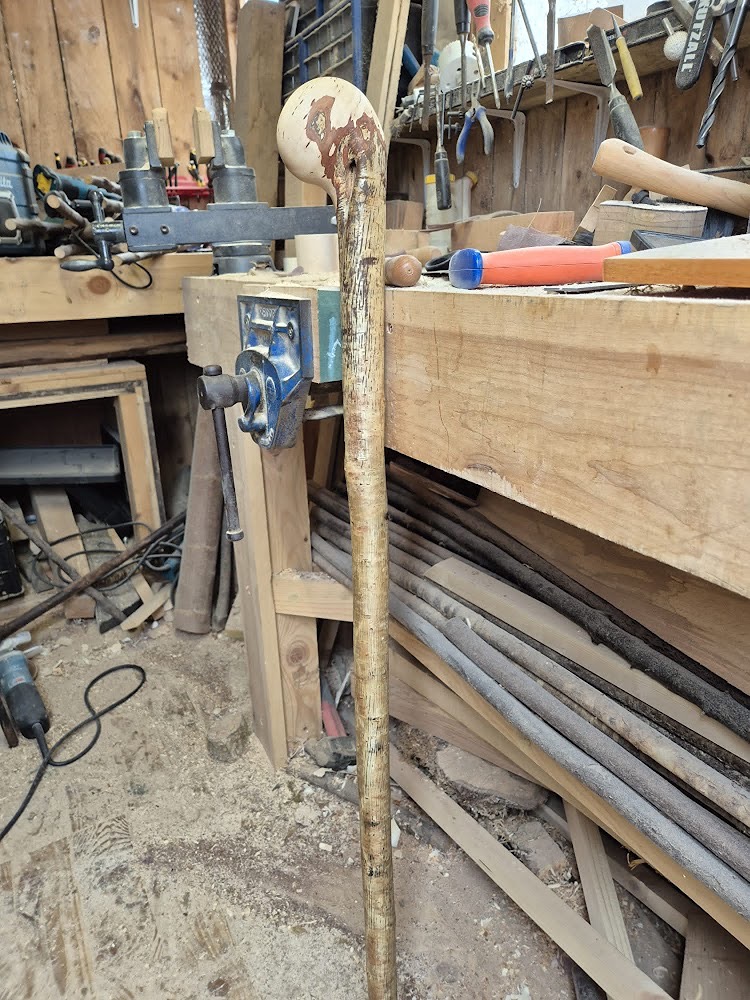
Why Hazel Makes Excellent Walking Sticks
Hazel has been used for walking sticks for generations, and it remains one of the most dependable woods available.
One of the greatest strengths of hazel is its balance between weight and strength. It is lighter than many hardwoods but retains excellent durability. This makes hazel walking sticks particularly suitable for long walks where comfort and reduced fatigue are important.
Hazel also offers a natural flexibility that helps absorb shocks when walking across uneven ground. This makes it a dependable choice for both countryside walkers and those who simply want reliable daily support.
We find hazel especially rewarding to work with because every stick has its own character. Some stems carry beautifully mottled bark patterns, while others develop rich tones as they mature and are finished.
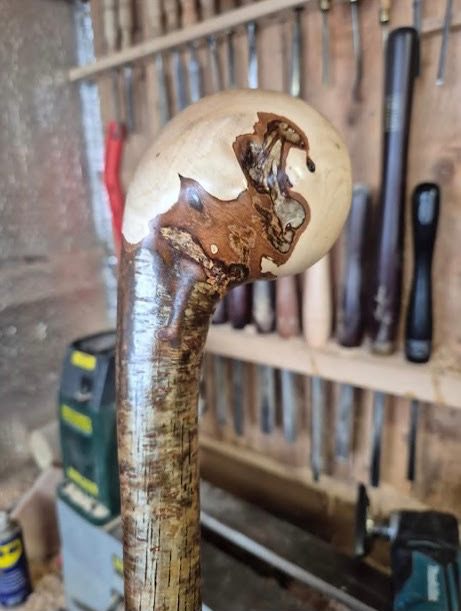
Coppiced Hazel – A Sustainable Traditional Resource
Our hazel walking sticks come from coppiced woodland, a traditional and sustainable method of woodland management that has been used for hundreds of years.
Coppicing involves cutting hazel stools back to encourage fresh growth. New straight stems grow naturally from the base, providing ideal material for walking sticks without damaging the root system. The woodland regenerates naturally, and new growth continues year after year.
Using coppiced hazel supports:
Sustainable woodland management
Healthy woodland ecosystems
Long-term renewable timber supply
Traditional countryside skills
By working with coppiced hazel, we are continuing a cycle that has been part of rural life for centuries.
Natural Beauty – Mottled Bark and Character
One of the reasons we enjoy working with hazel so much is the variety of natural bark finishes it produces.
Some hazel sticks carry:
Soft mottled bark patterns
Subtle colour variations
Naturally textured surfaces
Unique markings created by nature
No two hazel walking sticks are ever exactly alike. Each piece tells its own story through its grain and bark.
Many customers appreciate hazel sticks for their traditional countryside appearance — practical tools that still carry strong natural character.
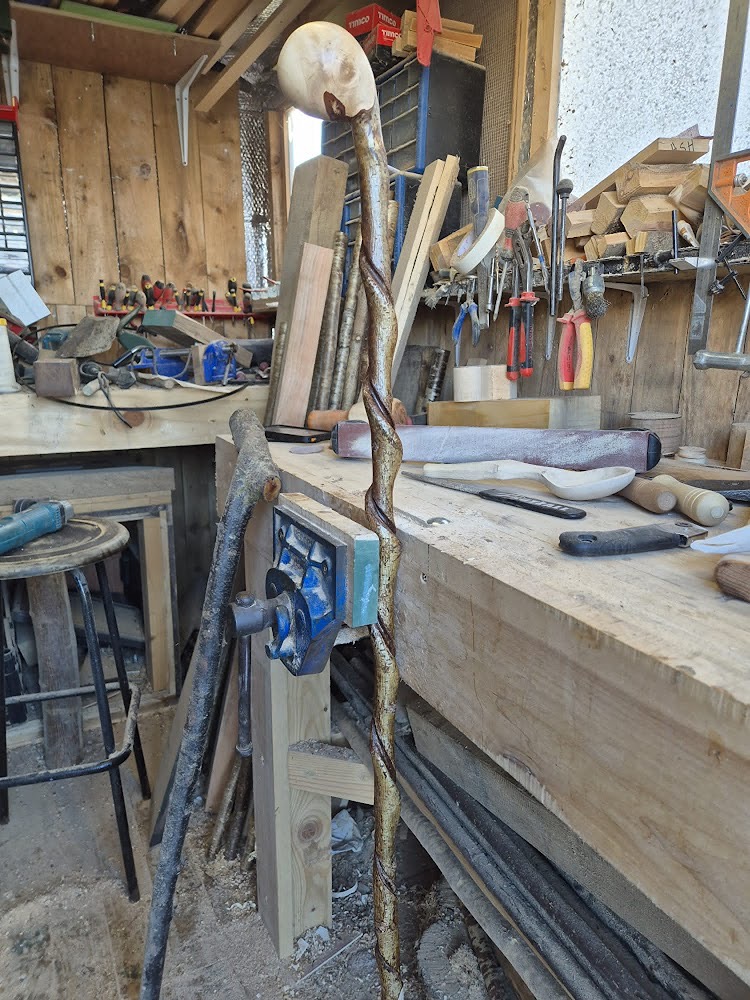
Honeysuckle Twist Hazel Walking Sticks
Among the most sought-after hazel sticks are those with honeysuckle twist.
These form when honeysuckle vines grow tightly around the hazel stem while it is still growing. Over time, this creates beautiful natural spirals and ridges in the wood. Once harvested and cleaned, the result is a striking walking stick with natural texture and visual interest.
Honeysuckle twist hazel is becoming increasingly hard to find, as it relies on specific growing conditions and years of natural development.
We particularly enjoy working with these rare pieces, as they combine natural beauty with traditional craftsmanship.
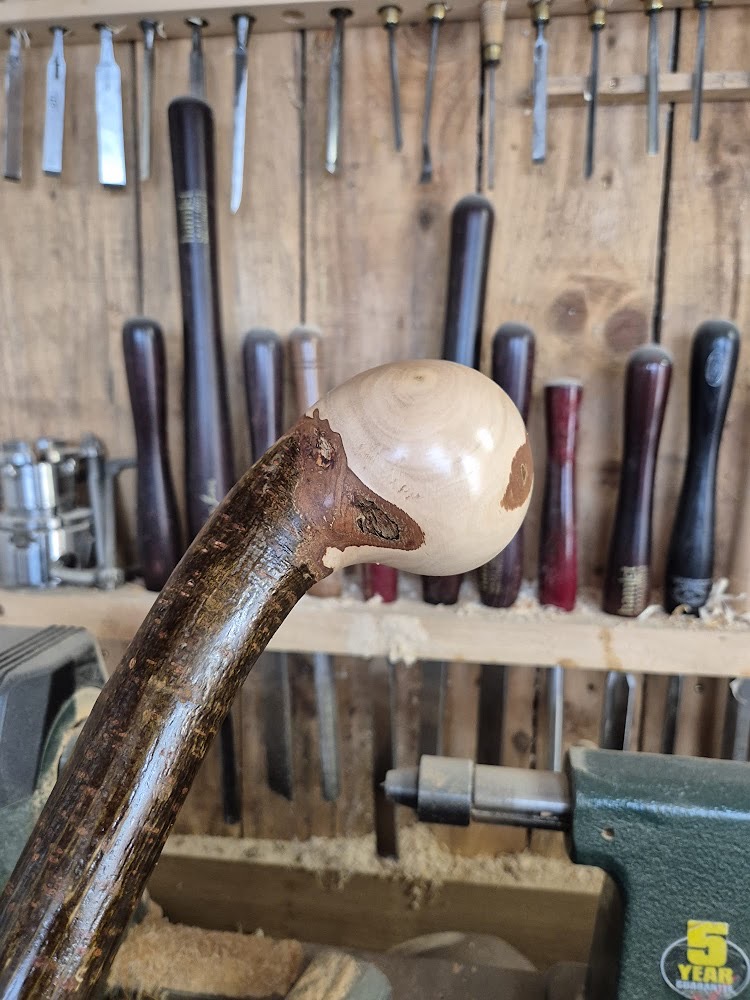
One-Piece Hazel Shillelaghs
Hazel is also a wonderful wood for making traditional one-piece shillelaghs.
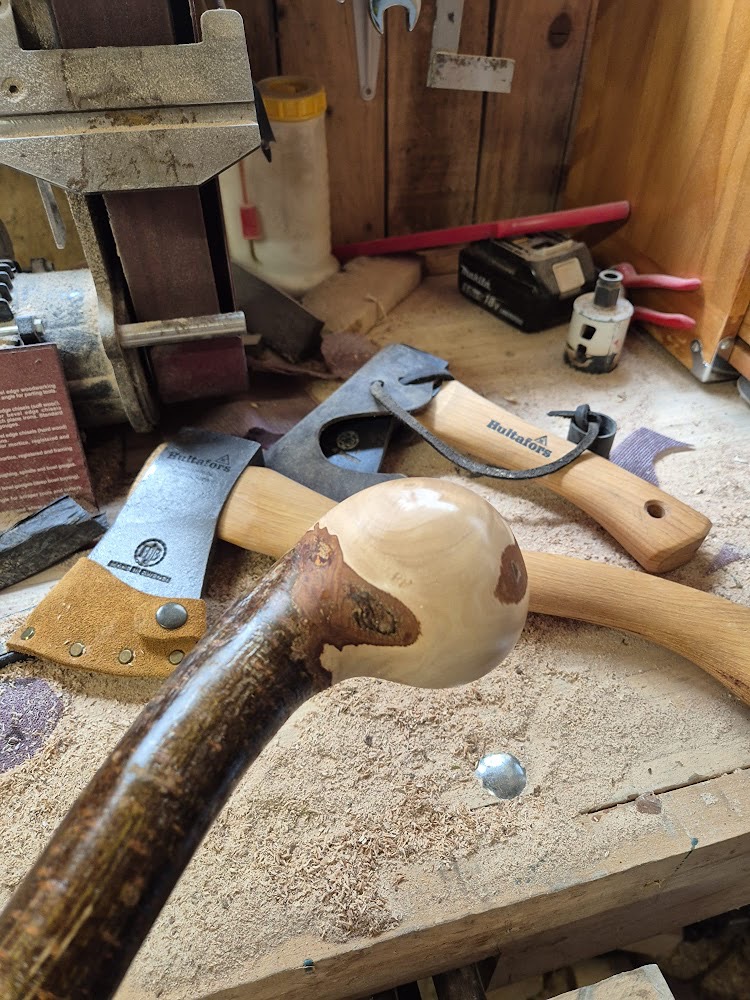
A properly selected hazel stem can form the shaft and handle from a single piece of wood, creating a strong and balanced stick with excellent durability.
Traditional hazel shillelaghs often feature:
Naturally formed handles
Smooth flowing lines
Balanced weight
Traditional oil or varnish finishes
We enjoy making these in the traditional style, selecting stems that naturally lend themselves to this classic Irish form.
The History of Hazel in Walking Sticks
Hazel has long held an important place in Irish and British tradition.
Historically, hazel rods were used for:
Walking staffs
Shepherd’s crooks
Rural tools
Traditional defensive sticks
Country walking aids
In Irish folklore, hazel was often associated with knowledge and wisdom. Hazel trees were valued not only for their nuts but also for their strong, flexible wood.
Many traditional walking sticks used throughout Ireland were made from hazel because it was widely available, easy to work, and dependable in everyday use.
Today, hazel remains one of the most trusted woods for traditional walking sticks.
Light, Strong and Practical for Everyday Use
Hazel walking sticks are popular because they offer:
Light weight for comfortable carrying
Strong structure for support
Natural flexibility
Good grip and balance
Traditional countryside style
They are suitable for:
Country walking
Hill walking
Woodland paths
Everyday support
Collectors of traditional sticks
Whether used daily or occasionally, a well-made hazel walking stick provides dependable support and lasting performance.
Our Hazel Walking Stick Making Process
Every hazel walking stick we make begins with careful selection.
We choose stems that are:
Naturally straight or attractively shaped
Well-seasoned
Free from major defects
Suitable for long-term use
The sticks are then:
Harvested from coppiced woodland
Carefully seasoned
Shaped and cleaned
Fitted with ferrules
Finished using oil or varnish
Inspected before sale
We take pride in making sticks that are not only practical but also reflect traditional workmanship.
Frequently Asked Questions About Hazel Walking Sticks
Are hazel walking sticks strong enough for everyday use?
Yes. Hazel is well known for its strength and durability. Despite being lighter than many hardwoods, it provides excellent support and is suitable for everyday walking.
Are hazel walking sticks lighter than blackthorn sticks?
In general, yes. Hazel walking sticks tend to be lighter than blackthorn, making them comfortable for longer walks while still offering good strength.
What is honeysuckle twist hazel?
Honeysuckle twist occurs when honeysuckle vines grow around hazel stems during their growth. This creates spiral patterns in the wood, producing highly decorative and unique walking sticks.
These are becoming harder to find and are often especially valued.
Are hazel walking sticks suitable for long-distance walking?
Yes. Their light weight and natural flexibility make hazel sticks particularly suitable for longer walks and countryside use.
How sustainable is coppiced hazel?
Coppiced hazel is highly sustainable. The tree regrows naturally after cutting, meaning new stems continue to develop without harming the root system. This makes it a renewable and environmentally responsible source of timber.
Can hazel walking sticks have antler handles?
Yes. Hazel shafts can be fitted with antler handles, wooden heads, or traditional knob handles depending on the style and materials available.
What finish is best for hazel walking sticks?
Hazel walking sticks are commonly finished with either:
Oil finishes for a natural appearance
Varnish finishes for added protection
Both provide durability and enhance the natural look of the wood.
Do hazel walking sticks vary in appearance?
Yes. Hazel is a natural material, and every stick is unique. Bark patterns, colour tones and markings vary from one piece to another.
This individuality is one of the things many customers appreciate most.
How long do hazel walking sticks last?
With proper care, a well-made hazel walking stick can last for many years. Keeping the ferrule in good condition and storing the stick in a dry place helps extend its life.
Are hazel walking sticks traditional in Ireland?
Yes. Hazel has been widely used across Ireland for centuries for walking sticks, tools and rural work. It remains one of the most traditional woods associated with countryside life.